China Top 10 Orthopedic Implants How Long Do They Last?

Time:2026-11-27 Author:Madeline
0%

“How long will an orthopedic implant last?” is a practical question, but there is no single answer. Materials, surgical technique, patient activity, bone quality, and follow-up care all matter. The phrase “shelf life” can also be misleading: it may refer to storage before implantation, while patients usually want to know how long an implant functions inside the body.

For a useful benchmark, a 2019 Lancet systematic review by orthopedic researcher Jonathan T. Evans and colleagues pooled long-term registry and cohort data. The authors wrote, “Our pooled estimates suggest that 58.4% of total hip replacements last 25 years.” Their analysis also estimated 25-year survival of 82.3% for total knee replacements. These figures describe populations, not a promise for any individual. Not every implant reaches that mark.

What is the typical shelf life of different types of orthopedic implants? This guide compares hips, knees, shoulders, spinal devices, and fracture-fixation hardware, while distinguishing expected service life from manufacturer storage limits. National joint-replacement registry reports provide valuable real-world evidence, but reporting methods and patient groups vary. That matters. A shoulder implant and a spinal construct face different loads, so their longevity should not be treated as interchangeable. The China Top 10 comparison that follows focuses on product categories and the evidence readers should check, rather than promising a fixed lifespan. Ask about the specific model, its clinical data, and follow-up results. Small differences matter.
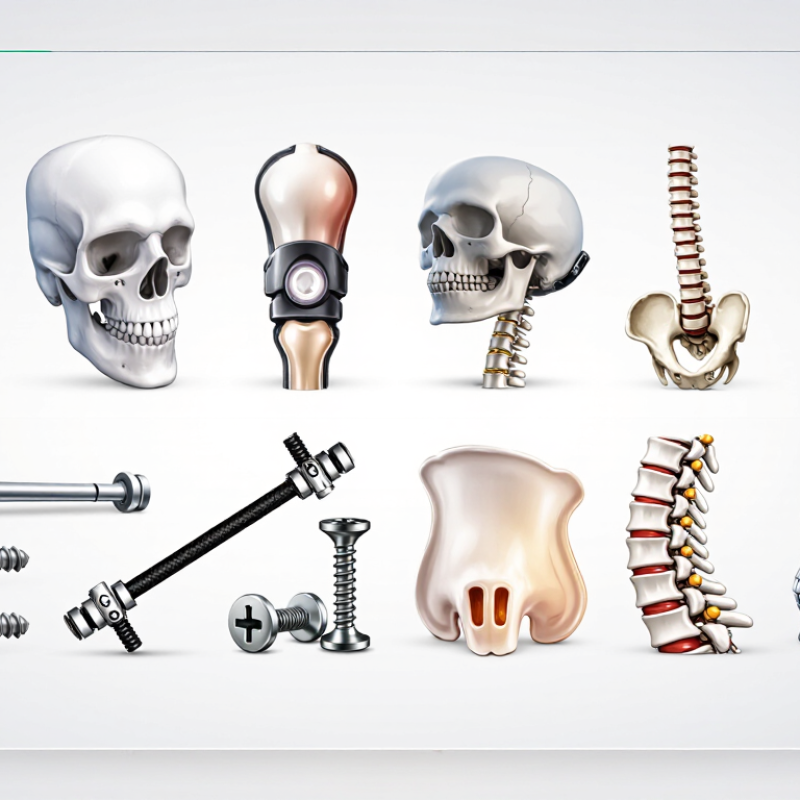
China Top 10 Orthopedic Implants How Long Do They Last?

What Orthopedic Implants Are Commonly Used in China?

In China, commonly used orthopedic implants include artificial hips and knees, fracture-fixation plates, screws and intramedullary nails, plus spinal cages and fixation systems. Hip and knee replacements address damaged joints; plates and nails stabilize broken bones. Spinal implants support selected procedures when conservative care is insufficient. Materials and designs vary, and suitability depends on the patient’s anatomy, diagnosis and activity level.

A national analysis of joint-replacement trends, published in 2022, reported that annual hip replacements increased from about 168,000 in 2011 to 577,000 in 2019; knee replacements rose from about 74,000 to 359,000. These figures show the scale of joint surgery, not the performance of every implant.

The picture is not perfectly uniform: hospitals and patient groups differ, and registry data cannot predict an individual result. Implant longevity also depends on factors such as bone quality, infection risk and surgical technique.

Tips: Ask which implant category is proposed, why it fits your case, and what follow-up is needed. Bring recent imaging to the consultation. Small details matter.

The Ten Main Implant Types and Their Typical Lifespans

China Top 10 Orthopedic Implants How Long Do They Last?
The Ten Main Implant Types and Their Typical Lifespans

Typical service life depends on patient age, activity, bone quality, surgical technique, and implant design. Total hip replacements commonly last 15–25 years; total knee replacements, about 15–20. Partial knee replacements often last 10–15 years. Shoulder replacements commonly serve 10–15 years, while ankle replacements may last roughly 8–12. These are clinical estimates, not guarantees. National joint registries, including the UK National Joint Registry’s 2024 report and the Australian Orthopaedic Association’s 2024 registry report, track revision outcomes over time. Their results show that many primary hip and knee replacements remain unrevised at ten years, but outcomes vary by patient and implant factors.

Other implant types follow different timelines. Spinal rods and screws may remain permanently after fusion; they are not routinely replaced on a fixed schedule. Fracture-fixation plates and screws, and intramedullary nails, support healing over months. They may be removed after healing or left in place if comfortable. ACL reconstruction fixation devices and bone anchors may remain, dissolve, or gradually lose structural relevance, depending on material and procedure. External fixation systems are usually temporary, often used for weeks or months. Short answer: there is no universal clock. A surgeon assesses pain, imaging, healing, and function; even so, a quiet implant can still need monitoring. Industry registry figures describe populations, not an individual patient’s forecast.

How Materials and Design Affect Implant Durability

An orthopedic implant’s lifespan depends on more than its material. Titanium alloys are relatively light and can bond well with bone, while cobalt-chromium alloys resist wear in some joint components. Ceramic surfaces can reduce friction, but they are not immune to damage. Each choice involves trade-offs. There is no universally best material.

Design matters just as much. A smooth bearing surface, secure fixation, and geometry that distributes load can reduce stress and wear. In a hip or knee, tiny particles from repeated movement may gradually affect surrounding tissue. Material pairing also matters: two surfaces rubbing together behave differently from either material alone. A chart can look convincing, yet it cannot predict one person’s outcome. That distinction is easy to miss.

Durability also varies with activity, bone quality, surgical placement, and changes in health. Some implants function for decades; others need revision sooner. No design offers a guaranteed service life. Patients should ask their orthopedic specialist which materials and design features suit their condition, and what signs warrant follow-up. Regular monitoring matters.

Patient and Surgical Factors That Influence Implant Longevity

Implant longevity depends on more than the device. A 2019 Lancet systematic review, drawing on national registries and clinical studies, estimated that 58.4% of total hip replacements and 82.3% of total knee replacements remained unrevised at 25 years. These are population estimates, not personal guarantees; implant design, patient age, and follow-up periods varied.

Patient factors matter. Higher body weight can increase forces across a joint, while smoking and poorly controlled health conditions may raise the risk of wound problems or infection. Bone quality also affects how securely an implant can anchor. Small details matter. A daily walk is not the same as repeated high-impact activity, and appropriate activity advice should be tailored to each patient rather than reduced to a blanket rule.

Surgical technique shapes the starting point. Accurate positioning, stable fixation, and careful management of soft tissues can help reduce avoidable stress and complications. Infection prevention is important, too. After surgery, follow-up visits can identify pain, loosening, or changes in movement before they become harder to assess. Still, longevity is not perfectly predictable: even with careful planning, wear, falls, or individual healing can alter the course. The Lancet estimates describe outcomes across groups, not a countdown for any one patient.

Wear, Follow-Up Care, and When Revision May Be Needed

China Top 10 Orthopedic Implants: How Long Do They Last?

Orthopedic implants do not have one fixed expiration date. Many hip and knee replacements function for 15 years or longer, but individual results vary. Implant type, bone quality, activity level, and overall health all matter. Some plates and screws support healing and may stay in place; others are removed when clinically appropriate. Wear can develop slowly, without obvious pain at first.

Regular follow-up helps clinicians check movement, comfort, and implant position. Depending on your history, visits may include examination and X-rays. Seek medical advice for persistent or worsening pain, swelling, reduced movement, or new difficulty bearing weight. These symptoms do not automatically mean an implant has failed. Revision may be considered for loosening, infection, fracture, or significant wear, but the decision depends on imaging, symptoms, and personal health. Even careful monitoring cannot predict every change.

Tips: Keep a record of follow-up visits and bring it to appointments. Ask which activities are suitable for your implant and when to return. Do not change exercise based only on online advice; small changes in pain deserve attention, too.

FAQS

How long do hip and knee replacements typically last?

Hip replacements often last 15–25 years. Total knee replacements commonly last 15–20 years. These are estimates, not promises.

How long might other joint replacements last?

Partial knee replacements often last 10–15 years. Shoulder replacements commonly last 10–15 years, while ankle replacements may last 8–12 years. Individual results vary.

Do all orthopedic implants need scheduled replacement?

No. Spinal rods and screws may remain after fusion. Plates and screws may stay after a fracture heals or be removed when clinically appropriate. There is no universal clock.

What can affect how long an implant lasts?

Age, bone quality, health, implant design, and surgical technique all matter. Higher body weight can increase joint forces. Healing varies, too.

Can everyday activity affect implant longevity?

Activity matters, but a daily walk is not the same as repeated high-impact exercise. Ask your care team what suits your implant. One rule will not fit everyone.

What symptoms should prompt medical advice?

Seek advice for persistent or worsening pain, swelling, reduced movement, or new trouble bearing weight. These symptoms do not automatically mean the implant has failed.

Does pain always mean an implant needs revision?

No. Clinicians consider symptoms, examination, and imaging. Revision may be discussed for problems such as loosening, infection, fracture, or significant wear. It depends on the person.

What happens during follow-up visits?

A clinician may check comfort, movement, and implant position. Depending on your history, you may have an examination or X-rays. Keep visit records handy.

Can anyone predict an implant’s exact lifespan?

Not reliably. Registry estimates describe groups, not one person. The figures look tidy. Bodies do not. A quiet implant may still need monitoring.

Conclusion

This article surveys ten common orthopedic implant types used in China, including hip and knee replacements, plates and screws, intramedullary nails, spinal devices, and other fixation implants. It explains what is meant by “What is the typical shelf life of different types of orthopedic implants,” distinguishing an implant’s expected service life inside the body from the expiration period of a sterile, unopened product. In-body durability varies widely: some fixation devices remain permanently, while joint replacements may eventually wear or require revision.

The article also explores how material properties, implant design, surgical technique, activity level, bone health, and other patient factors affect longevity. Regular follow-up can help identify wear, loosening, infection, or other complications early. No lifespan is guaranteed, and only a qualified clinician can assess an individual implant and advise whether monitoring or revision may be appropriate.

Madeline

Madeline

Madeline is a dedicated marketing professional with a wealth of expertise in our company's core offerings. With a keen understanding of the industry, she brings a unique perspective to her role, consistently delivering high-quality content that highlights the superior aspects of our products. As......