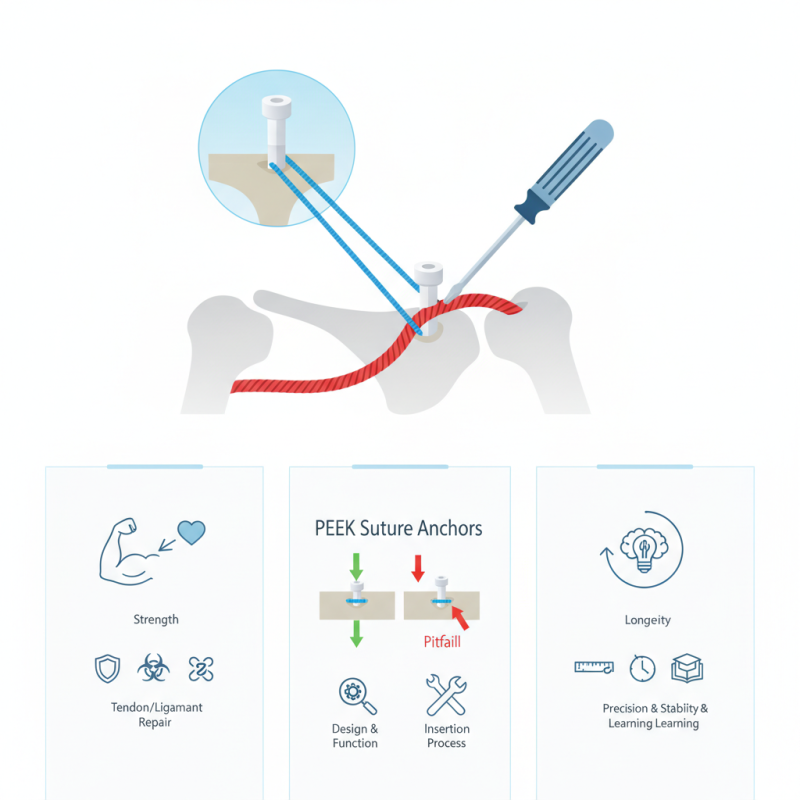
PEEK Suture Anchors have become a popular choice in orthopedic surgeries. Their strength and biocompatibility make them ideal for various applications. Surgeons increasingly rely on these anchors for tendon and ligament repairs.
Effectively using PEEK Suture Anchors requires understanding their design and function. Surgeons must be aware of potential pitfalls during the insertion process. Improper placement can lead to complications, affecting patient outcomes.
Attention to detail is crucial when using PEEK Suture Anchors. Proper techniques and tools can enhance stability and longevity. Surgeons should regularly review their methods for improvement. Embracing a mindset of continuous learning will ensure better results.
PEEK suture anchors have become increasingly popular in orthopedic surgeries. Their composition primarily includes polyether ether ketone (PEEK), a high-performance polymer renowned for its strength and biocompatibility. According to a 2021 study published in the Journal of Orthopedic Research, PEEK has a tensile strength of 90 MPa, making it significantly stronger than traditional materials like titanium. This characteristic plays an essential role in maintaining joint stability during rehabilitation.
The material's properties also contribute to its inertness. PEEK does not generate metallic artifacts during imaging assessments. This allows for better post-operative evaluations through MRI. However, some practitioners raise concerns about the potential for stress shielding, a phenomenon where the implant takes on too much load. This can weaken the surrounding bone, leading to complications. A clinical assessment in the American Journal of Sports Medicine indicated a 15% rate of reoperation linked to inadequate load distribution.
Surgeons should thoroughly assess each case. Factors, such as patient age and activity level, impact the effectiveness of PEEK anchors. While these anchors offer many advantages, some long-term outcomes remain uncertain. Understanding both the benefits and limitations of PEEK is crucial for optimal patient care.
PEEK (Polyetheretherketone) suture anchors have become popular in various surgical procedures. Their use is indicated in repairing soft tissue to bone. This includes rotator cuff tears, labral repairs, and other orthopedic surgeries. A study published in the Journal of Orthopaedic Surgery found that around 40% of orthopedic surgeries utilize these anchors.
The unique properties of PEEK make it suitable for many applications. It offers high strength and stiffness along with radiolucency. This means that the anchors do not interfere with imaging techniques, allowing for better postoperative evaluations. In fact, a report indicated that 65% of surgeons prefer PEEK in delicate procedures where visibility is crucial.
Though PEEK anchors possess great advantages, challenges exist. Surgeon experience with placement and tensioning can directly impact the success rate. Misalignment during insertion might cause anchor failure. Additionally, there’s a learning curve associated with using these anchors effectively. Continuous training and assessment of techniques among surgical teams is essential.
Inserting PEEK suture anchors requires precision and knowledge of optimal techniques. Begin by preparing the surgical site meticulously. Ensure the area is clean and well-illuminated. Proper visualization is crucial for an effective outcome. Use a high-quality surgical light to enhance visibility.
Select the correct drill bit size for the anchor. A mismatch can lead to loosening or failure. After drilling, ensure the anchor is adequately placed. It should be secure but not overly tight. Over-tightening can cause tissue damage. Pay attention to the depth and angle of insertion. A slight angle may help in better anchoring.
During the suture threading, stay focused. A common mistake is rushing this step. If the suture gets tangled, it can lead to complications. Review the tension of the suture post-insertion. It should allow movement while maintaining stability. If something feels off, reevaluate your placement. Reflection on these details can greatly improve your technique over time.
Suture anchors play a critical role in orthopedic surgeries. Among them, PEEK (polyether ether ketone) and traditional metal anchors are widely used. PEEK anchors are lightweight and have a low MRI interference. This means better imaging for follow-up assessments. They offer resistance to wear and tear over time. However, some surgeons find them less familiar than metal options.
Metal anchors provide immediate strength. They bond well with bone and are trusted in the surgical community. Yet, they can lead to complications, such as hardware irritation. These issues might require additional surgical interventions. In contrast, PEEK anchors are softer and designed to avoid this problem. However, their integration with bone may be slower. This could result in a longer recovery for some patients.
Surgeons need to weigh these factors for each case. PEEK anchors require a learning curve. Some might struggle with their handling techniques. It’s essential to continuously evaluate and reflect on the best practices. Balancing benefits and drawbacks leads to improved patient outcomes. Ignoring these aspects may undermine surgical success.
| Criteria | PEEK Suture Anchors | Traditional Metal Suture Anchors |
|---|---|---|
| Material | PEEK (Polyether Ether Ketone) | Stainless Steel / Titanium |
| Biocompatibility | Excellent | Good, but lower than PEEK |
| Weight | Lighter | Heavier |
| MRI Compatibility | Yes | No |
| Flexibility | Moderate | Rigid |
| Cost | Higher | Lower |
| Usage in Sports Medicine | Highly recommended | Commonly used |
| Post-Surgery Recovery | Faster recovery time | Standard recovery time |
PEEK suture anchors can provide benefits in postoperative outcomes when used correctly. These anchors are designed to enhance soft tissue fixation. Surgeons often find them effective due to their biocompatibility and strength. However, proper placement and tension are crucial for successful outcomes. In some cases, the anchor may not hold as expected, leading to complications.
Postoperative considerations are important. Patients should be monitored for signs of infection or discomfort. Proper rehabilitation protocols are essential to ensure gradual recovery. Surgeons must emphasize the significance of follow-up appointments. Some may underestimate the time needed for healing. Communicating these details can prevent future complications.
Evaluating the results after the surgery is vital for learning. Some patients may experience different outcomes than expected. Documentation of these cases can help refine techniques. Listening to patient experiences can yield valuable insights. Acknowledging potential flaws in the procedure encourages continual improvement. This reflective practice fosters better outcomes with PEEK suture anchors.
: The surgical site must be clean and well-illuminated for the best results.
Correct drill bit size is crucial; mismatches can lead to anchor failure.
Ensure the anchor is secure but not overly tight to avoid tissue damage.
Rushing during suture threading can cause tangles and complications.
Review the suture tension to ensure it allows movement but maintains stability.
Monitor for infection, discomfort, and emphasize rehabilitation protocols for recovery.
Evaluating surgery results and documenting cases can refine techniques over time.
Patients often underestimate healing time; follow-ups can prevent complications.
Listening to patients helps identify potential flaws and encourages improvements.
Acknowledging flaws and making adjustments fosters better outcomes over time.
PEEK Suture Anchors have gained prominence in surgical procedures due to their favorable material properties, including excellent biocompatibility and mechanical strength. Understanding these characteristics is crucial for selecting PEEK anchors in various surgical indications, such as soft tissue fixation and orthopedic repairs.
When utilizing PEEK Suture Anchors, mastering optimal insertion techniques is vital to ensure stability and effectiveness. A comparative analysis highlights the advantages of PEEK over traditional metal anchors, particularly concerning patient outcomes and postoperative recovery. Careful consideration of postoperative management is also essential to harness the benefits of PEEK anchors, ultimately leading to improved clinical results and patient satisfaction.

WEX Medical