The use of Ilizarov Fixators has revolutionized bone healing practices. Renowned orthopedic surgeon Dr. Andrew G. Ilizarov once stated, "The Ilizarov method opens new possibilities for orthopedic treatment." This highlights the significance of these devices in modern medicine.
Ilizarov Fixators work by applying mechanical forces to stabilize bone fragments. They consist of rings and rods that create a stable support system. Patients experiencing complex fractures or deformities have benefited from this innovative approach. However, challenges exist. Not every case responds positively to this method, and complications may arise, such as infection or discomfort.
Incorporating the Ilizarov Fixators requires careful planning and execution. Clinicians must evaluate each patient’s unique situation. The beauty of this technique lies in its adaptability. Yet, it demands ongoing reflection on its efficacy and potential shortcomings. The journey to healing is not always straightforward, but with dedication, Ilizarov Fixators can be pivotal in restoring mobility and function.
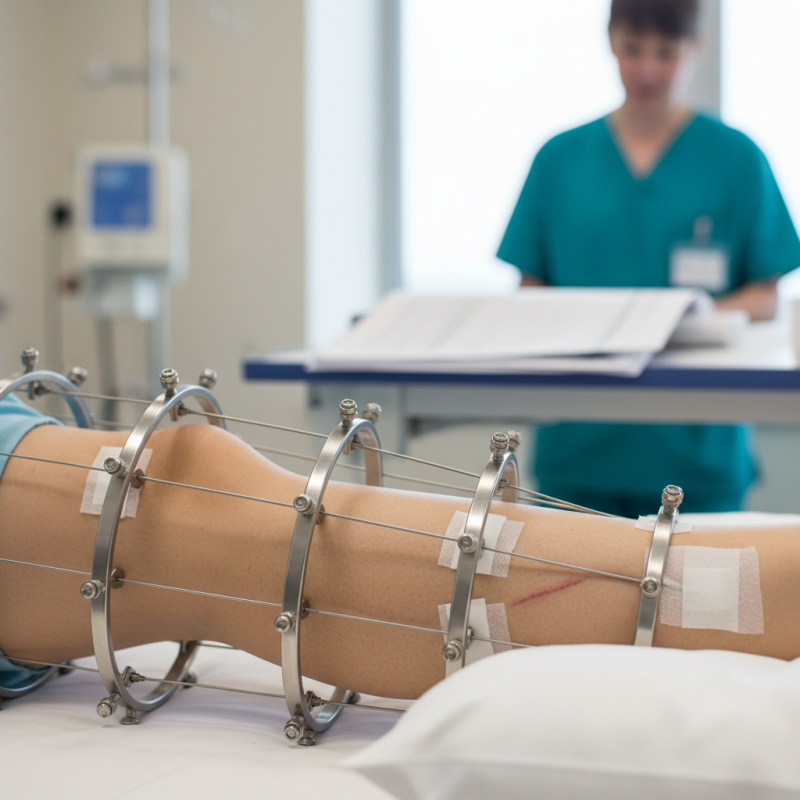
Ilizarov fixators are widely used for bone healing. They are effective in various scenarios. Their primary indications include complex fractures that do not heal properly. They are also suitable for limb lengthening procedures.
Patients with severe bone defects can benefit from these devices. Ilizarov fixators help in stabilizing the bone during recovery. They can be employed in cases of bone transportation. This method allows for gradual adjustment. It requires careful monitoring and patient compliance.
In some cases, complications may arise. Infection around the fixation points is a concern. Some patients face difficulties adapting to the fixator. They might experience discomfort as well. Regular follow-up appointments are essential.
Overall, while Ilizarov fixators offer effective solutions, they demand a commitment from the patient and the medical team.
The Ilizarov fixator is a revolutionary tool in orthopedic surgery. It consists of rings, wires, and rods that stabilize bone fractures. Understanding its components is crucial for effective use. The rings are typically made from lightweight materials, allowing easy adjustments. Wires pass through the bone and connect to the rings, securing alignment and stability.
Tips: Always check the tension of wires. Loose wires can lead to instability. Regular monitoring is vital, especially in the initial stages.
The design of the fixator allows for distraction osteogenesis, promoting bone regeneration. Surgeons must be skilled in applying appropriate forces. Each case varies, and one size does not fit all. Adjusting the fixator can be challenging and requires careful consideration.
Tips: Keep communication open with the patient. Discuss possible discomfort and expectations. Encourage them to report issues quickly.
Ultimately, the Ilizarov fixator is not just a mechanical device; it requires ongoing evaluation and adjustments. Mistakes can occur, such as incorrect placement or excessive tension. Reflection on these practices can enhance outcomes.
This chart illustrates the effectiveness of Ilizarov fixators in promoting bone healing over a 12-week recovery period. The data represents the percentage of patients achieving successful bone healing at different intervals.
Ilizarov fixators are essential for bone healing. They provide stability and allow for gradual bone adjustment. This method is beneficial for complex fractures and deformities. The procedure starts with an assessment of the injury. Ensure the fracture site is clean and free of infection. Images from X-rays help determine the best placement of the fixator.
Next, the surgeon makes small incisions around the bone. Pins are inserted through the skin into the bone. Proper alignment is crucial. If the pins are misaligned, it can hinder healing. The external frame connects to these pins, stabilizing the fracture. This part requires careful adjustments over time. Patients may face discomfort as the frame holds the bone in place.
Monitoring the healing process is important. Regular follow-ups help track bone growth and alignment. Adjustments to the fixator may be needed frequently. Remember, patience is key. Patients should adhere to the care instructions given by the medical team. Healing can take time, and it may not be linear. A lack of improvement could signal underlying issues. Regular communication with healthcare providers is vital for a successful recovery.
Post-operative care is crucial for patients using Ilizarov fixators. Proper monitoring can significantly impact the healing process. Patients should be educated on potential complications. Pain management is essential. Regular assessments help in early detection of issues like infections. It's vital to check the pin sites daily. Cleanliness is paramount to reduce infection risks.
Physical therapy is often needed. Patients should begin gentle exercises as soon as tolerated. This enhances circulation and can support bone healing. A study noted that patients who began therapy earlier experienced better outcomes. However, some may struggle with adherence to this regimen. Motivation can wane, leading to inconsistent efforts. Healthcare providers should encourage a supportive environment for these patients.
Nutrition also plays a key role. Adequate protein intake is linked to improved healing rates. The recommended intake is around 1.6 to 2.0 grams per kilogram of body weight. Yet, many patients overlook this aspect. They may underestimate the impact of diet on recovery. Regular follow-ups to discuss dietary habits are important for progress. Inadequate nutritional support can hinder the overall healing process.
Ilizarov fixators have shown promising outcomes in bone healing techniques. Studies indicate that the success rate can be as high as 90% for reconstructive procedures. This technique is particularly effective for complex fractures and bone deformities. The method uses external frames and tensioned wires to stabilize fractured bones, allowing for optimal healing conditions.
However, results can vary based on several factors. Patient compliance, the nature of the injury, and the skill of the surgeon all play crucial roles. A review from orthopedic journals shows that improper usage can lead to complications like joint stiffness or infection in up to 20% of cases. This emphasizes the need for close monitoring throughout the healing process.
Tips:
Regular follow-ups with the healthcare provider are essential. Monitor for any signs of infection early. Keep the fixation device clean to reduce complications. Remember, healing is not just physical; mental preparation and support are equally important. Transitions towards mobility should always be gradual.
: The Ilizarov fixator is a tool used in orthopedic surgery to stabilize bone fractures.
The fixator consists of rings, wires, and rods. These components work together for stability.
It allows for distraction osteogenesis, which helps in healing and bone growth.
Loose wires can cause instability. Regular checks are essential, especially at the start of treatment.
Complications may include joint stiffness or infection, occurring in about 20% of cases.
Compliance plays a crucial role in healing. It impacts recovery speed and success rates.
Patients should discuss discomfort, expectations, and any issues they encounter. Open communication is key.
Adjusting the fixator can be challenging. It requires careful consideration and skill from the surgeon.
Regular follow-ups are vital for monitoring healing progress and preventing complications.
Mental support is equally important as physical healing. It aids in the transition towards mobility.
Ilizarov Fixators are specialized devices used in orthopedic surgery for promoting bone healing, particularly in cases of complex fractures or deformities. The indications for their use include non-union fractures, limb lengthening, and correction of malalignments. Understanding the fundamentals of the fixator's components and design is crucial for their effective application.
The step-by-step application process involves precise surgical techniques to ensure optimal positioning of the fixators. Post-operative care and continuous monitoring of the patient are essential to assess healing progress and manage any complications. Overall, studies have reported positive outcomes and success rates with Ilizarov Fixators, highlighting their effectiveness in achieving bone healing and restoring limb function.

WEX Medical