5 Tips Why Certified Orthopedic Implants Gain Market Trust?

Time:2026-10-20 Author:Oliver
0%

Orthopedic implants carry more than a patient’s weight. They carry clinical expectations, procurement scrutiny, and long-term responsibility. A surgeon examining a hip stem needs confidence in its design, materials, and manufacturing history. A hospital also needs clear evidence before approving a supplier. Certification helps make that evidence visible.

So, why do certified orthopedic implants have higher market acceptance? The answer involves several connected signals of trust. Recognized certification can demonstrate controlled manufacturing, documented risk management, and consistent quality procedures. Standards such as ISO 13485 may support this process when applied properly. Traceability matters too. A well-managed implant should connect its material batch, inspection records, sterilization status, and release approval. These details may seem administrative. In practice, they can guide safer decisions.

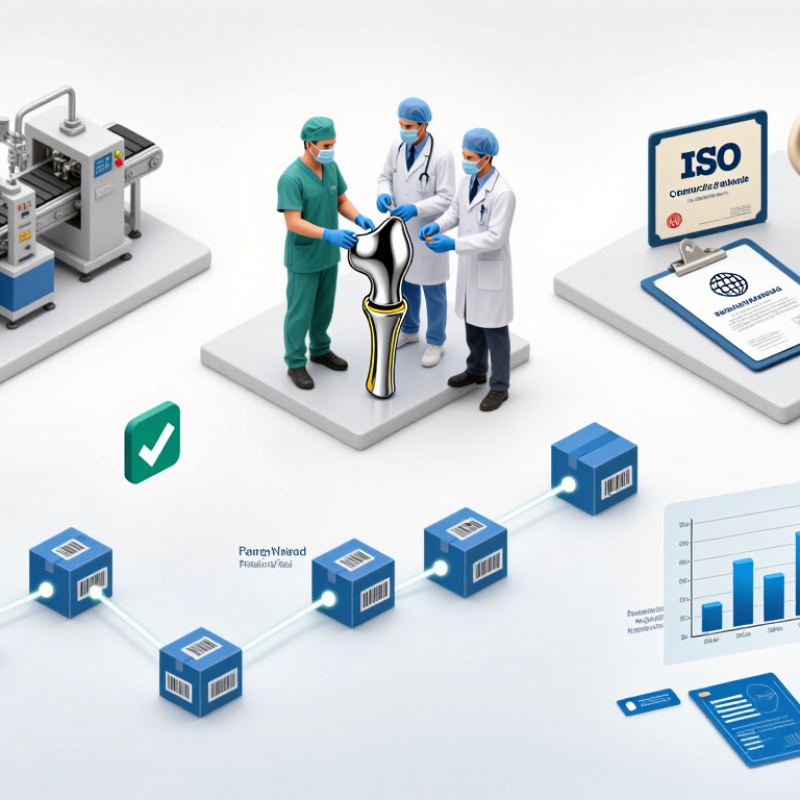
This article presents five practical reasons certified implants gain stronger market trust. It considers product consistency, clinical credibility, regulatory readiness, supply-chain transparency, and post-market responsibility. Certification does not automatically prove that every implant is perfect. That distinction is easy to miss. Real confidence also depends on clinical evidence, experienced engineers, careful audits, and honest communication with surgeons and distributors. Some manufacturers may focus too heavily on the certificate itself. That is a weakness worth questioning. Trust grows when documented compliance matches the implant seen in the operating room. It also grows when companies investigate complaints, review performance data, and improve designs responsibly. These habits help certified orthopedic implants earn acceptance across hospitals, surgeons, and international purchasing teams.
5 Tips Why Certified Orthopedic Implants Gain Market Trust?

What Certified Orthopedic Implants Mean in Modern Healthcare

Certified orthopedic implants represent more than a quality label. They show that a device has passed defined checks for materials, design, manufacturing, and safety. In modern healthcare, certification supports informed decisions by surgeons, hospitals, and patients. It also creates a traceable record, from production lot numbers to sterile packaging and surgical use.

Trust grows through practical details. A hospital can verify certification documents before procurement. Staff can check packaging integrity before surgery. Surgeons can review clinical evidence, imaging results, and handling instructions. Post-market monitoring may reveal performance patterns that initial testing cannot show. These steps connect regulatory evidence with real clinical experience.

Certification is not a guarantee of perfect outcomes. Patient anatomy, surgical technique, rehabilitation, and follow-up still matter. A well-documented implant may perform poorly if storage conditions fail or instructions are misunderstood. That point deserves more attention. Certification can also vary between regions, so buyers should confirm the applicable requirements and current validity. Reliable manufacturers support clear records, responsive reporting, and transparent safety updates. In the operating room, that confidence may appear quietly: an intact package, a readable lot number, and a team that knows what to check.

How Certification Verifies Implant Safety and Clinical Performance

Certified orthopedic implants earn market trust because certification turns technical claims into documented evidence. In procurement reviews, I look for test reports, audit records, and traceability details, not attractive promises. Certification can verify material quality, dimensional accuracy, sterilization controls, and manufacturing consistency. It cannot remove every surgical risk. That distinction matters.

Tip 1:

Check how safety was tested. Fatigue testing should imitate repeated loading around a hip, knee, or spine. Corrosion testing can reveal how materials behave in bodily fluids. Clear records show test methods, acceptance limits, and corrective actions. Small gaps deserve questions.

Tip 2:

Examine clinical performance evidence. Strong certification usually connects laboratory results with clinical data, follow-up periods, and reported complications. Surgeons need practical information, such as implant stability, revision rates, and imaging changes over time. One successful case proves little. Real confidence grows from consistent evidence across patients and settings.

Tip 3:

Confirm ongoing oversight. Certification is not a permanent promise. Manufacturers should maintain post-market surveillance, complaint reviews, supplier controls, and change-management records. A minor design or material change may affect performance. I have seen teams focus heavily on initial approval and overlook later monitoring. That is an understandable weakness, but it should be corrected. Trust develops when certification supports transparent decisions before, during, and after implantation.

Why Quality Standards Strengthen Trust Among Surgeons and Hospitals

5 Tips Why Certified Orthopedic Implants Gain Market Trust?

Surgeons and hospitals trust orthopedic implants when quality claims can be checked, repeated, and traced. That confidence starts with controlled design, validated manufacturing, and documented risk management. ISO 13485 certification signals a functioning quality system, not merely polished paperwork. Audits examine supplier controls, process records, corrective actions, and complaint handling. These details matter when an implant sits beside bone for decades.

The World Health Organization’s Global Patient Safety Action Plan reports that one in ten patients experiences harm during healthcare. It also estimates that more than half of this harm is preventable. That statistic changes the purchasing conversation. Teams need evidence beyond a certificate. Batch traceability, sterilization validation, and post-market surveillance show how a supplier responds under pressure. The American Joint Replacement Registry’s 2024 Annual Report tracks more than three million hip and knee procedures. This scale supports stronger outcome monitoring.

Yet registry data cannot erase every uncertainty. Implant selection still depends on anatomy, surgical technique, and patient factors. Some procurement teams may overvalue a familiar certificate. That is a real weakness. Certification does not guarantee perfect clinical outcomes. It provides a disciplined foundation for reviewing them. Trust grows when standards meet transparent evidence, responsive technical support, and honest discussion of limitations.

5 Tips Why Certified Orthopedic Implants Gain Market Trust? - Why Quality Standards Strengthen Trust Among Surgeons and Hospitals

No. Trust-Building Tip Relevant Standard or Regulatory Framework Quality Evidence Hospitals Can Review How It Strengthens Market Trust
1 Confirm a controlled quality-management system ISO 13485:2016
Medical-device quality-management systems
A valid certificate issued by an accredited conformity-assessment body, documented design controls, supplier controls, production records, complaint handling, and corrective-action procedures. Demonstrates that quality is managed through documented and auditable processes rather than relying only on final-product inspection.
2 Verify biological safety of patient-contacting materials ISO 10993 series
Biological evaluation of medical devices
A risk-based biological evaluation covering relevant endpoints such as cytotoxicity, sensitization, irritation, systemic toxicity, and implantation effects when applicable to the device and duration of contact. Gives surgeons and clinical teams evidence that material selection and patient-contact risks were assessed using internationally recognized methods.
3 Make design and clinical risks traceable ISO 14971:2019
Medical-device risk management
A documented risk-management file linking identified hazards, risk controls, verification results, residual risks, post-market information, and benefit-risk conclusions. Supports informed purchasing and clinical decisions by showing how foreseeable hazards were identified, controlled, and monitored throughout the product life cycle.
4 Demand validated sterilization and packaging integrity ISO 11135 for ethylene-oxide sterilization
ISO 11137 for radiation sterilization
ISO 11607 for sterile-barrier packaging
Sterilization validation records, defined process parameters, routine monitoring, packaging seal and integrity testing, and shelf-life or accelerated-aging evidence where applicable. Reduces uncertainty about microbial safety, package protection, and product sterility from manufacturing through the point of use.
5 Review performance, clinical evidence, and regulatory status ISO 14155:2020 for good clinical practice
Applicable regional requirements, such as the EU MDR or the U.S. FDA device pathway
Clinical-investigation documentation when required, mechanical and fatigue-test reports, intended-use evidence, regulatory authorization or conformity documentation, labeling, and post-market surveillance records. Connects laboratory performance and clinical claims with the intended patient population, helping hospitals assess effectiveness, safety, traceability, and long-term accountability.

Note: Certification, conformity assessment, and regulatory authorization requirements vary by device classification and market. Hospitals should verify the current certificate scope, product model, intended use, issuing body, and applicable jurisdiction before procurement.

How Traceability and Regulatory Compliance Reduce Patient Risk

5 Tips Why Certified Orthopedic Implants Gain Market Trust?

How Traceability and Regulatory Compliance Reduce Patient Risk

Certified orthopedic implants earn confidence when every critical detail can be checked. Traceability links an implant to its material certificate, manufacturing lot, sterilization record, and final inspection. A clear lot number can help hospitals identify affected devices quickly. It also supports faster and more accurate clinical decisions.

Five practical controls strengthen this process.

  • Verify supplier qualifications before production begins.
  • Review biocompatibility and mechanical testing records.
  • Confirm that packaging protects sterility until use.
  • Record the implant’s unique device identifier in the patient file.
  • Investigate complaints through documented corrective actions.

These steps create evidence, not just reassuring language. Trust needs proof.

Regulatory compliance adds another layer of protection. Manufacturers should follow applicable quality systems, maintain controlled procedures, and preserve accurate production records. Independent audits can reveal weak training or incomplete documentation.

Still, certification is not a guarantee of perfect performance. Human error, unusual anatomy, and incomplete follow-up can affect outcomes. That limitation deserves honest discussion. In practice, reliable traceability helps clinicians respond when something goes wrong. It also gives patients stronger questions to ask about implant safety, testing, and long-term monitoring.

Why Certified Implants Support Long-Term Market Confidence

Certified orthopedic implants earn long-term market confidence through evidence, not slogans. Grand View Research valued the global orthopedic devices market at approximately USD 47.2 billion in 2023. It projects a 4.9% compound annual growth rate from 2024 to 2030. In this expanding market, certification helps buyers compare quality signals across suppliers. ISO 13485-based quality systems require controlled design, manufacturing, documentation, and corrective actions. Those controls make each implant easier to trace, from raw material batches to operating-room records.

Trust also depends on what happens after implantation. The World Health Organization’s Global Patient Safety Report 2024 states that about one in ten patients experiences harm during healthcare delivery. Certification cannot remove every clinical or manufacturing risk. That limitation deserves honest attention. Strong suppliers therefore combine validated testing with post-market surveillance, complaint analysis, and transparent field updates. Orthopedic teams can review fatigue data, sterilization records, coating performance, and clinical follow-up before selecting an implant. Small details matter, such as readable lot numbers on packaging and consistent instructions for use. Engineers and surgeons should also question whether laboratory results reflect real bone quality, patient activity, and revision conditions. Market confidence grows when certified manufacturers share evidence, respond quickly, and improve processes after failures. The paperwork matters, but practical accountability matters more.

Certified orthopedic implants gain long-term market confidence through documented quality systems, regulatory review, clinical evidence, traceability, and post-market surveillance. The chart shows representative trust factors and their relative contribution based on commonly reported priorities in medical-device procurement and clinical evaluation.

FAQS

What does certification mean for an orthopedic implant?

Certification shows that an implant passed defined checks for materials, design, manufacturing, and safety. It supports informed decisions. It does not guarantee perfect results.

Which documents should hospitals review before purchasing implants?

Hospitals should review certification records, test reports, audit findings, and traceability information. Lot numbers should connect production records with sterile packaging. Missing details deserve questions.

How can staff check an implant before surgery?

Staff should inspect the package for tears, moisture, or broken seals. They should also confirm the lot number and expiration information. Small checks matter.

What safety tests may support certification?

Fatigue testing can imitate repeated loading around a hip, knee, or spine. Corrosion testing examines material behavior in bodily fluids. Records should show methods and acceptance limits.

Does certification prove strong clinical performance?

Not completely. Reliable evidence may include follow-up data, imaging results, implant stability, and reported complications. One successful case proves little.

What factors can affect implant outcomes after certification?

Patient anatomy, surgical technique, rehabilitation, storage, and follow-up can influence results. Instructions may be misunderstood. Certification cannot remove every surgical risk.

Why is traceability important for orthopedic implants?

Traceability connects an implant to its production lot, packaging, and surgical use. This helps teams investigate complaints or performance patterns. Records must remain readable.

Does certification remain valid forever?

No. Requirements and certification status can change between regions. Buyers should confirm current validity and applicable rules before procurement.

What should manufacturers monitor after implants enter clinical use?

They should review complaints, complications, supplier controls, and product changes. Post-market monitoring may reveal problems missed during initial testing. I may still overlook a later design effect.

Conclusion

Certified orthopedic implants represent a higher standard of safety, consistency, and clinical accountability in modern healthcare. Certification indicates that an implant has undergone structured evaluation for material quality, manufacturing control, performance, and patient safety. It helps surgeons and hospitals make more confident decisions because the product’s design and production processes are measured against recognized quality requirements. Why do certified orthopedic implants have higher market acceptance? They provide credible evidence that the implant is suitable for clinical use and that its performance has been carefully assessed.

Certification also strengthens long-term trust through traceability and regulatory compliance. Each implant can be linked to defined manufacturing records, inspection procedures, and quality controls, making it easier to identify and manage potential risks. This transparency supports responsible patient care, improves communication among healthcare professionals, and reduces uncertainty throughout the supply chain. As hospitals increasingly prioritize reliable outcomes and risk management, certified orthopedic implants are more likely to gain surgeon confidence, institutional approval, and sustained market recognition.

Oliver

Oliver

Oliver is a seasoned marketing professional with a wealth of expertise in driving brand awareness and engagement. With a deep understanding of our company's product offerings, he consistently delivers high-quality content that enriches our professional blog. His insights not only shed light on......