The global orthopedic trauma fixation market is witnessing a significant paradigm shift, with Elastic Intramedullary Nails (EIN) becoming the gold standard for specific diaphyseal fractures. As of 2024, the market is driven by an increasing incidence of pediatric fractures and the rising demand for minimally invasive surgical (MIS) techniques. Globally, top-tier manufacturers are focusing on biocompatible materials such as titanium alloy (Ti-6Al-4V ELI) to ensure optimal flexibility and mechanical strength.
In the commercial sphere, the "Top 10 Elastic Intramedullary Nails Manufacturers" dominate the market through extensive R&D and global distribution networks. However, the rise of specialized Chinese manufacturers like WEX Medical has introduced a new era of "High Quality + Cost-Effectiveness," challenging traditional European and American market leaders by providing CE-certified implants at competitive factory prices.
Annual Market Growth
MIS Adoption Rate
Exporting Countries
Certified Quality
The industry is moving toward personalized medicine and advanced materials. Here are the key trends shaping the future of Intramedullary systems:
Integration of surface-modified titanium to enhance osseointegration and reduce infection risks (Anti-bacterial coatings).
Using AI and 3D modeling to select the exact diameter and length of the elastic nail before the first incision is made.
Shift towards lean manufacturing processes that reduce titanium waste and energy consumption in CNC centers.
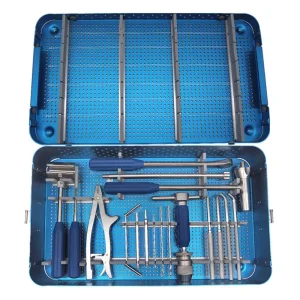
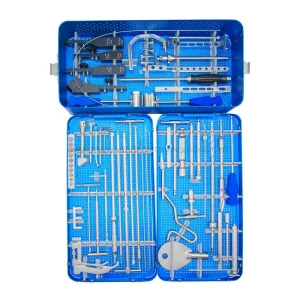
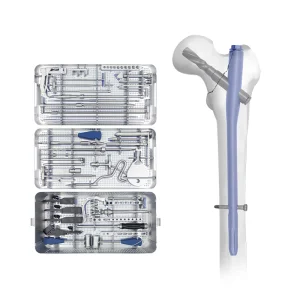
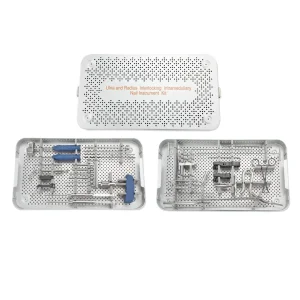
Our Titanium Elastic Orthopedic Surgery Intramedullary Nail Instrument Set is designed for seamless surgical flow. It includes specialized reamers, inserters, and locking tools that ensure the "Three-Point Fixation" principle is achieved with absolute precision.
Global procurement managers are no longer just looking for the lowest price. The modern demand focuses on:
Elastic Nails are predominantly used in:
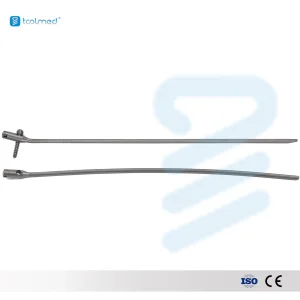
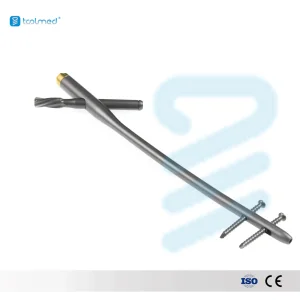
The Orthopedic Implant Elastic Intramedullary Nail provides the perfect balance between flexibility and stability. Its unique design allows for micro-motion at the fracture site, which actually promotes faster callus formation and biological healing.
Changsha WEX Medical Instruments Co., Ltd. has experiences of more than two decades in areas of innovation and production of orthopaedic implants, such as bone plates, bone screws, interlocking nails, spine implants/internal fixation systems, and all kinds of instruments, which are branded by "WEX". All the implant products have certification of CE and ISO9001/ISO13485, so can reach different requirements of customers.
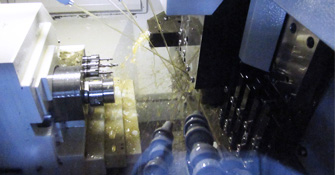
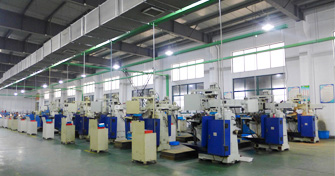
Our workshops house more than hundred production equipments, including CNC sliding headstock auto-lathes and CNC milling machines, ensuring micron-level precision for every nail.
Using Tensile-testing machines, Durometers, and Fluorescent fault detectors, we ensure zero-defect delivery for all orthopedic implants.
Our packaging process is conducted in a clean workshop line with GMP standards, ensuring the sterility and safety of every medical device.
At the beginning of company's establishment, we aim to design and produce implantable products professionally for our customers. Relying on the operational systems of development, design, production and marketing, which is formed by the orthopaedic experts in domestic large and medium-sized hospitals, also we completed the clinical insurance for our products.
We satisfy our customer's requirements with best quality and best service, based on our advanced production and processing technology. Because we insist on the idea of "Be professional for manufacturing high-quality products, be wholehearted for serving customers."
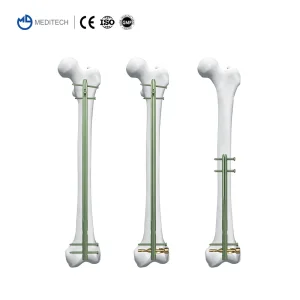
The Elastic Stable Intramedullary Nailing (ESIN) technique is based on the biomechanical principle of three-point fixation. By inserting two flexible nails from opposite sides of the bone, an internal bracing system is created. This system provides sufficient stability to maintain alignment while allowing axial compression—the "active" ingredient in bone healing.
Unlike rigid interlocking nails used in adult femurs, elastic nails do not disrupt the blood supply to the medullary canal to the same extent. This is critical in pediatric cases where the periosteum is thick and active. Our Titanium Elastic Nails are engineered with a specific modulus of elasticity that mimics the natural properties of cortical bone, reducing the risk of stress shielding.
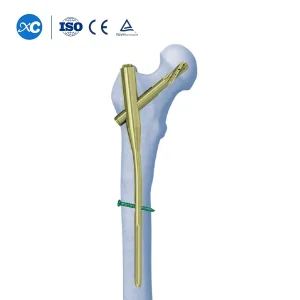
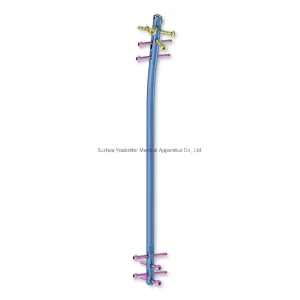
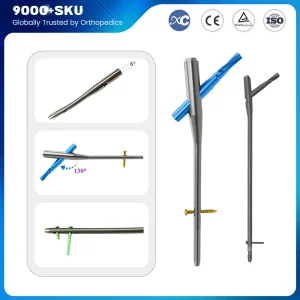
Furthermore, the development of the PFNA (Proximal Femoral Nail Antirotation) systems has revolutionized the treatment of trochanteric fractures. By combining the elastic principle with a helical blade or locking screw, we provide a solution that prevents rotation and "cut-out" in osteoporotic bone.
The manufacturing process at WEX involves rigorous chemical analysis. We use Carbon and sulphur analyzers to verify the purity of our titanium ingots. Every batch of nails undergoes pitting LP detecting and fluorescent fault detection to ensure that no micro-fractures exist within the metal structure, which could lead to implant failure under the cyclic loading of patient movement.
 WEX Medical