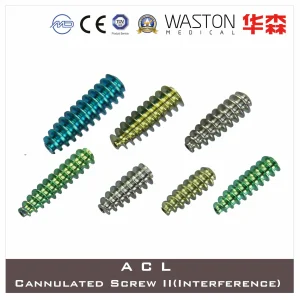
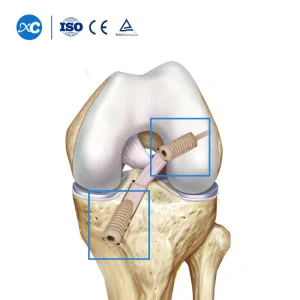
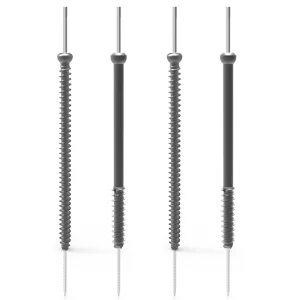
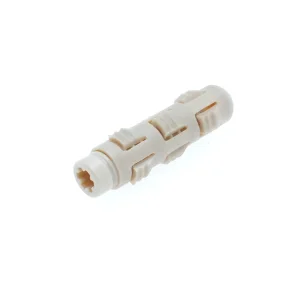
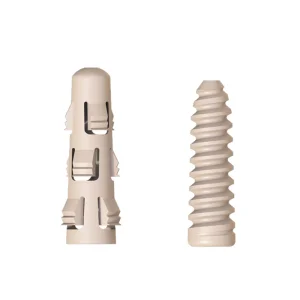
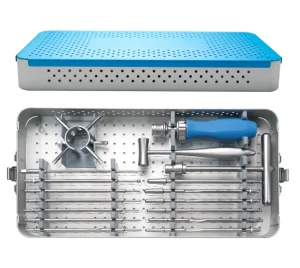
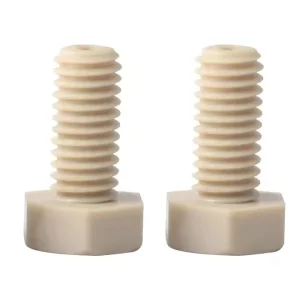
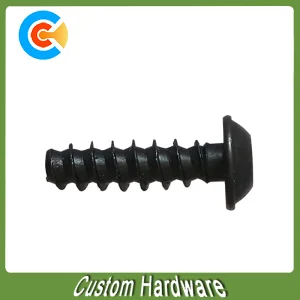
The global orthopedic market has witnessed a paradigm shift in recent years, particularly in the field of sports medicine. At the heart of this evolution lies the Interference Screw, a critical component used primarily for graft fixation in Anterior Cruciate Ligament (ACL) and Posterior Cruciate Ligament (PCL) reconstructions. As a leading Interference Screws Factory and Exporter, we recognize that these small devices carry the immense responsibility of restoring mobility to athletes and patients worldwide.
Industrial Insight: The global interference screws market is projected to grow at a CAGR of 6.5% over the next decade, driven by an aging population that remains active and a surge in sports-related injuries across emerging economies.
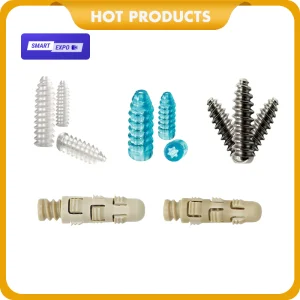
Historically, interference screws were predominantly made of Titanium or Stainless Steel. While these materials offered unmatched strength, they often required secondary surgeries for removal and caused interference with MRI imaging. Today, the industry has shifted toward high-performance polymers and bioabsorbable materials.
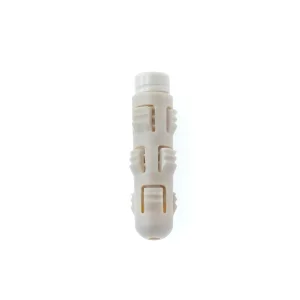
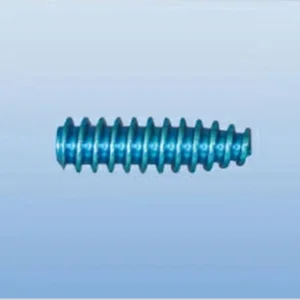
Our flagship Bioabsorbable Interference Screw is engineered for ACL reconstruction, providing superior initial fixation strength while facilitating biological integration. Manufactured in our GMP-standard cleanrooms, this screw ensures a smooth transition from mechanical fixation to natural healing.
Procurement officers for hospitals and medical distribution networks are no longer just looking for "a screw." They are looking for a comprehensive partnership. Global procurement trends show a sharp increase in demand for cannulated designs, which allow for more precise guide-wire placement during arthroscopic procedures. Furthermore, there is a significant push for customization in thread pitch and length to accommodate diverse patient anatomies—from pediatric sports injuries to geriatric ligament repairs.
Hospitals Supplied
Years R&D Exp
ISO/CE Certified
Exporting Countries
As a premier Interference Screws Exporter located in Changsha, China, we offer a unique blend of high-tech manufacturing and cost-efficiency. The competitive edge of Chinese medical manufacturing has evolved from "mass production" to "precision engineering."
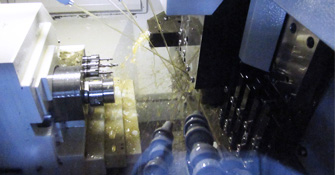
Our facility, Changsha WEX Medical Instruments Co., Ltd., utilizes advanced CNC machining centers and sliding headstock auto-lathes from global leaders. This allows us to maintain tolerances within microns—a necessity when dealing with the delicate threads of an interference screw that must "bite" into bone without causing fragmentation.
The industry is moving toward biocomposite materials—a blend of PEEK and hydroxyapatite (HA). This innovation aims to bridge the gap between the mechanical strength of polymers and the osteoconductive properties of minerals. Our R&D team is at the forefront of this technology, ensuring that our distributors have access to the latest surgical solutions.
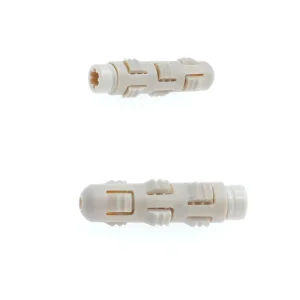
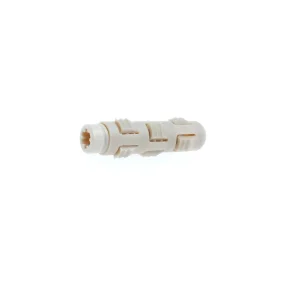
Optimized for knee arthroscopy, our PEEK interference screws offer the best quality for minimally invasive orthopedic implants. They provide high pull-out strength and are completely inert, making them the preferred choice for elite athlete rehabilitation.
The application of interference screws varies significantly across regions. In North America and Europe, the focus is on high-speed outpatient surgeries where screw-driver interface ergonomics and rapid fixation are paramount. In Southeast Asia and Latin America, there is a growing demand for durable, cost-effective solutions that can withstand the rigors of heavy manual labor post-recovery.
Our products are designed with these global scenarios in mind. We provide full surgical instrument sets that accompany our screws, ensuring that surgeons in any part of the world have the tools they need for a successful outcome.
Changsha WEX Medical Instruments Co., Ltd. has experiences of more than two decades in areas of innovation and production of orthopaedic implants, such as bone plates, bone screws, interlocking nails, spine implants/internal fixation systems, and all kinds of instruments, which are branded by "WEX". All the implant products have certification of CE and ISO9001/ISO13485, so can reach different requirements of customers.
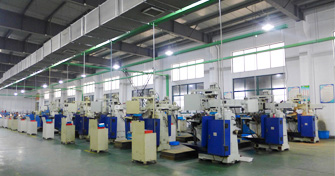
With a Quality Management System passed ISO 9001:2008 and ISO 13485:2003, we have bright and spacious factory workshops; more than hundred production equipments, such as advanced CNC machining centre machines, CNC sliding headstock auto-lathes, CNC milling machines, CNC lathing machines, upmarket ultrasonic cleaning equipments and etc; more than ten advanced and well-appointed testing equipment, such as Projectors, Tensile-testing machines, Durometers, Carbon and sulphur analyzers, Pitting LP detecting instruments and Fluorescent fault detectors and so on. The packaging process is conducted in clean workshop line with GMP standard.
At the beginning of company's establishment, we aim to design and produce implantable products professionally for our customers. Relying on the operational systems of development, design, production and marketing, which is formed by the orthopaedic experts in domestic large and medium-sized hospitals, also we completed the clinical insurance for our products.
In ACL surgery, the graft must be held securely within the bone tunnel until biological incorporation occurs. An "interference fit" refers to the mechanical compression of the graft against the tunnel wall by the screw. Our engineering team focuses on three core pillars:
The pitch and depth of the threads are optimized to prevent graft laceration. Sharp, thin threads provide excellent purchase in cortical bone, while broader threads are used for cancellous bone fixation. By offering varied geometries, we ensure our interference screws serve both tibial and femoral fixation needs effectively.
A perfectly centered cannula is vital. Any deviation during the manufacturing process can lead to screw breakage or guide-wire binding. At WEX Medical, our CNC processes guarantee concentricity, providing surgeons with a tactile feel of security during insertion.
One of the biggest challenges in polymer screws is the "stripping" of the drive head. We have optimized our hex and star-drive interfaces to handle high-torque demands, ensuring the screw can be fully seated even in dense bone without compromising the drive recess.
As we look toward the future, the integration of AI in surgical planning will dictate the next generation of interference screws. Patient-specific implants and 3D-printed titanium lattices are on the horizon. As a tech-forward Interference Screws Factory, we are already exploring how digital twin technology can optimize our manufacturing cycles and reduce time-to-market for new designs.
 WEX Medical