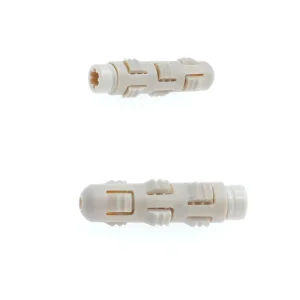
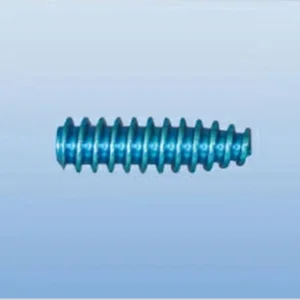
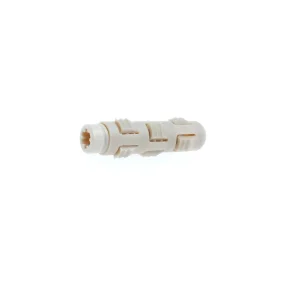
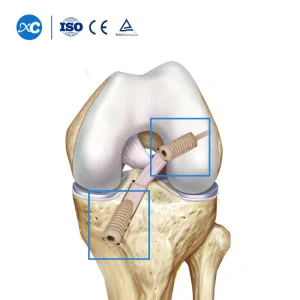
High-precision arthroscopic solutions for ligament reconstruction and fixation.
Nagoya, the heart of Japan's Chukyo industrial region, has long been recognized as a global leader in advanced manufacturing and precision engineering. While historically famous for its automotive and aerospace contributions (the "Nagoya Protocol" on biodiversity also highlights its importance in international science), the city has quietly evolved into a critical hub for Interference Screws manufacturing and medical device innovation.
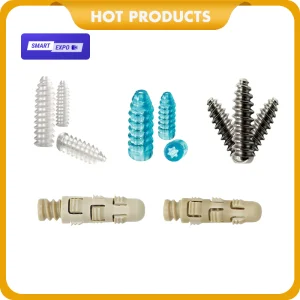
The local industrial ecosystem in Nagoya leverages the sophisticated metallurgical and polymer processing techniques originally perfected for high-tech industries. Today, Nagoya-based factories are pioneering the use of PEEK (Polyetheretherketone) and bioabsorbable materials like PLLA (Poly-L-lactic acid) to create interference screws that offer unmatched biocompatibility and mechanical strength for ACL and PCL reconstruction.
For global buyers, Nagoya represents a benchmark for "Zero-Defect" manufacturing. The integration of AI-driven CNC machining and rigorous quality control protocols ensures that every interference screw produced meets the stringent demands of modern sports medicine.
Manufacturing Experience
Certified Quality Systems
High-End Production Units
Exporting to 50+ Countries
Exploring the shift towards bio-composites and patient-specific orthopedic solutions.
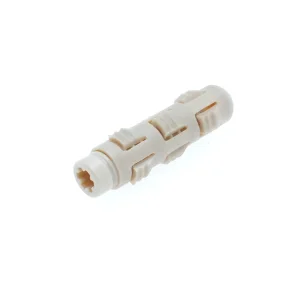
The shift from traditional Titanium to PEEK and Bioabsorbable composites is the most significant trend in Nagoya's factories. PEEK screws offer a modulus of elasticity similar to human bone, reducing stress shielding, while bioabsorbable options eliminate the need for secondary removal surgeries.
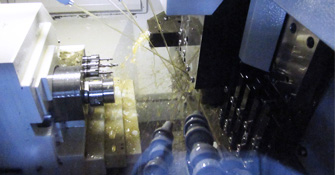
Modern interference screws are designed for Arthroscopic delivery. This requires extremely high torque resistance in a small footprint. Nagoya manufacturers are utilizing "sliding headstock auto-lathes" to produce screws with complex thread patterns that maximize graft fixation with minimal bone trauma.
With the increasing reliance on MRI for post-operative monitoring, the demand for non-magnetic interference screws is surging. By using 316L stainless steel (non-magnetic variants) or advanced polymers, factories are ensuring zero interference with diagnostic imaging.
Changsha WEX Medical Instruments Co., Ltd. has experiences of more than two decades in areas of innovation and production of orthopaedic implants, such as bone plates, bone screws, interlocking nails, spine implants/internal fixation systems, and all kinds of instruments, which are branded by "WEX". All the implant products have certification of CE and ISO9001/ISO13485, so can reach different requirements of customers.
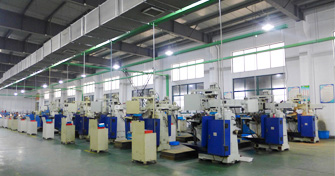
With a Quality Management System passed ISO 9001:2008 and ISO 13485:2003, we have bright and spacious factory workshops; more than hundred production equipments, such as advanced CNC machining centre machines, CNC sliding headstock auto-lathes, CNC milling machines, CNC lathing machines, upmarket ultrasonic cleaning equipments and etc; more than ten advanced and well-appointed testing equipment.
Relying on the operational systems of development, design, production and marketing, which is formed by the orthopaedic experts in domestic large and medium-sized hospitals, also we completed the clinical insurance for our products. We satisfy our customer's requirements with best quality and best service, based on our advanced production and processing technology.
How Nagoya's medical institutions utilize our interference screws in clinical practice.
In Nagoya's leading medical institutions, such as the Nagoya University Hospital and Nagoya City University Hospital, Interference Screws are a staple in orthopedic sports medicine. The local clinical trend favors PEEK Interference Screws for younger, active patients undergoing ACL (Anterior Cruciate Ligament) reconstruction. These screws provide the rigid fixation necessary for aggressive early rehabilitation programs popular in Japan's sports culture.
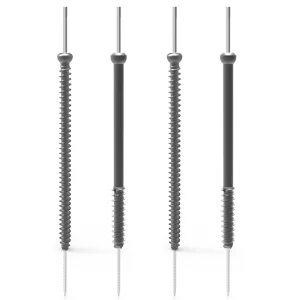
Furthermore, in the industrial rehabilitation clinics surrounding Nagoya's automotive hubs, workers often require ligament repairs that can withstand heavy physical loads. Here, the use of Cannulated Interference Screws allows surgeons to use a guide wire for precise placement, ensuring the highest success rate in anatomical reconstruction. The "Nagoya Approach" combines high-tech implants with meticulous surgical techniques, making it a world-class model for orthopedic care.
Another unique scenario involves the use of Bioabsorbable Interference Screws in pediatric orthopedics. By selecting screws that slowly dissolve and are replaced by natural bone, surgeons in Nagoya minimize the risk of growth plate interference, showcasing a commitment to long-term patient health and "Omotenashi" (wholehearted hospitality) in medical service.
Engineered for stability, biocompatibility, and surgical precision.
Precision engineering meets biological science in our Nagoya-grade manufacturing lines.
Our production utilizes multi-axis CNC machining centers to ensure the "pitch" and "lead" of every interference screw are perfect. This guarantees maximum pull-out strength in the femoral and tibial tunnels.
Following GMP standards, all interference screws undergo ultrasonic cleaning and are packaged in a 100,000-class clean workshop to ensure absolute sterility before they reach the operating theater.
By using carbon and sulphur analyzers alongside tensile-testing machines, we verify that the raw materials—whether Titanium, PEEK, or PLLA—meet the biomechanical stresses of the human body.
As a leading Interference Screws manufacturer, we are committed to the philosophy of "Be professional for manufacturing high-quality products, be wholehearted for serving customers." Our presence in the Nagoya market continues to grow as we provide localized solutions for the complex needs of modern orthopedics.
 WEX Medical