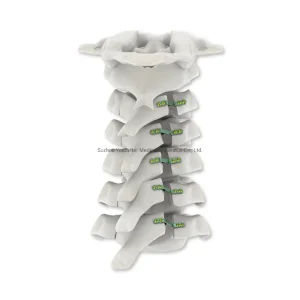
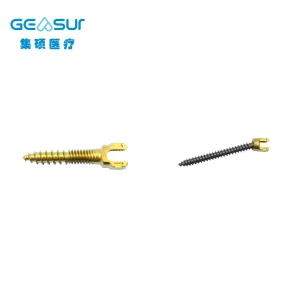
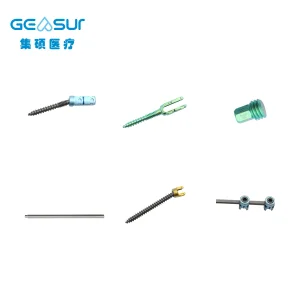
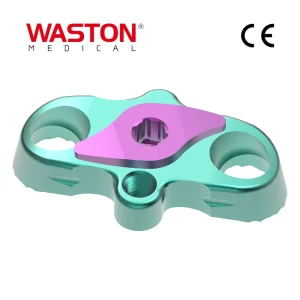
Canada’s healthcare infrastructure is renowned globally for its commitment to high-quality patient care and technological integration. As the aging population in provinces like Ontario, British Columbia, and Quebec continues to grow, the demand for sophisticated spinal intervention tools, particularly Pedicle Screw Systems, has reached an all-time high. For manufacturers and exporters, Canada represents a market defined by rigorous regulatory standards set by Health Canada and a surgical community that demands precision, biocompatibility, and ease of use.
The Canadian orthopedic market is currently undergoing a transformative phase. With the rise of "smart" hospitals in Toronto and Montreal, the integration of pedicle screw systems is no longer just about mechanical fixation; it is about data-driven outcomes. Canadian surgeons are increasingly looking for systems that are compatible with intraoperative navigation and robotic-assisted platforms. This trend has pushed manufacturers to refine the design of screws—utilizing titanium alloys and Cobalt-Chrome (CoCrMo) to ensure long-term stability in patients suffering from degenerative disc disease, scoliosis, and traumatic spinal injuries.
Exporting to Canada requires a deep understanding of the Medical Devices Regulations (MDR). As a leading exporter, we ensure that every pedicle screw, rod, and connector meets the ISO 13485 standards, providing Canadian clinics and hospitals with the reliability they need to reduce surgical complications and improve post-operative recovery times. The focus in Canada has shifted toward minimally invasive surgery (MIS), where cannulated pedicle screws play a pivotal role in reducing muscle trauma and hospital stay durations.
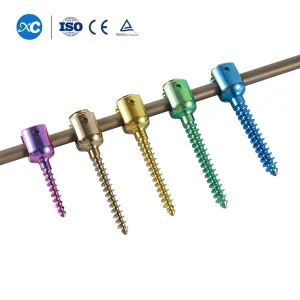
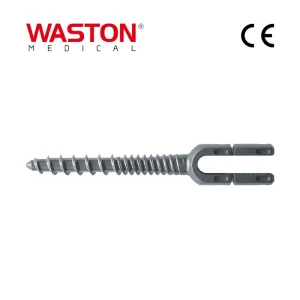
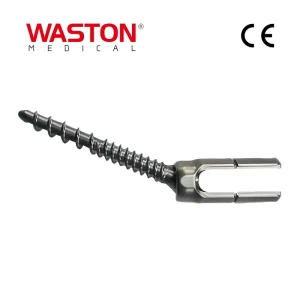
In the competitive landscape of Canadian medical device procurement, several key trends are emerging. Manufacturers are moving beyond traditional monoaxial screws toward polyaxial and axial-rotation designs that offer greater intraoperative flexibility. In Canada, where sports-related spinal injuries (common in hockey and alpine sports) and work-related trauma are significant, these systems must be robust enough to handle high-stress loads.
Technological synergy is the new standard. Pedicle screw systems are now designed to be recognized by AI-driven imaging software, allowing Canadian surgeons in academic hospitals to plan screw trajectories with sub-millimeter accuracy, significantly lowering the risk of neural damage.
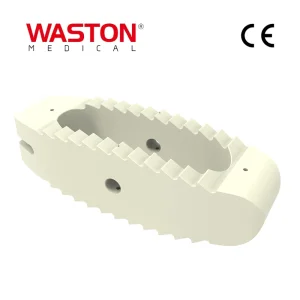
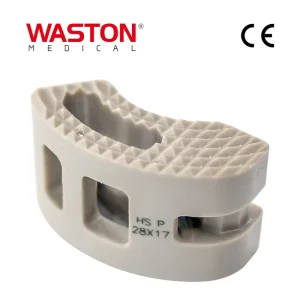
The use of 3D-printed porous titanium surfaces in spinal implants is gaining traction in Canada. While the screws themselves are machined via high-precision CNC processes, the associated cages and connectors often utilize advanced surface treatments to promote rapid osseointegration.
The application of pedicle screw systems in Canada varies by region. Large urban centers like the Greater Toronto Area (GTA) often utilize high-end, complex fixation systems for deformity corrections. Conversely, in more remote regions of the Prairie Provinces or the Maritimes, there is a strong demand for reliable, cost-effective, and easy-to-transport instrument sets that allow general orthopedic surgeons to perform stabilization procedures without needing highly specialized peripheral equipment.
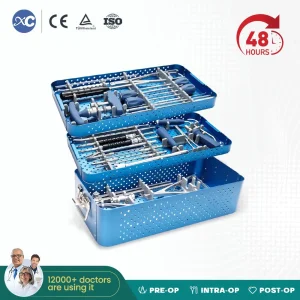
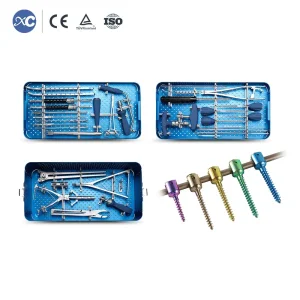
As a global exporter, we understand that "one size does not fit all." Our product range includes everything from the 5.5mm system for smaller statures to the 6.0mm heavy-duty systems designed for complex thoracolumbar reconstructions. Our disposable instrument sets are particularly popular in Canadian outpatient clinics, where sterilization turnaround time is a critical bottleneck.
Changsha WEX Medical Instruments Co., Ltd. has experiences of more than two decades in areas of innovation and production of orthopaedic implants, such as bone plates, bone screws, interlocking nails, spine implants/internal fixation systems, and all kinds of instruments, which are branded by "WEX". All the implant products have certification of CE and ISO9001/ISO13485, so can reach different requirements of customers.
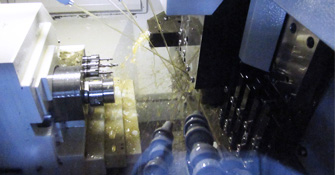
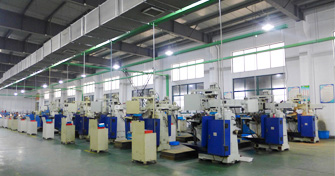
With a Quality Management System passed ISO 9001:2008 and ISO 13485:2003, we have bright and spacious factory workshops; more than hundred production equipments, such as advanced CNC machining centre machines, CNC sliding headstock auto-lathes, CNC milling machines, CNC lathing machines, upmarket ultrasonic cleaning equipments and etc; more than ten advanced and well-appointed testing equipment, such as Projectors, Tensile-testing machines, Durometers, Carbon and sulphur analyzers, Pitting LP detecting instruments and Fluorescent fault detectors.
At the beginning of company's establishment, we aim to design and produce implantable products professionally for our customers. Relying on the operational systems of development, design, production and marketing, which is formed by the orthopaedic experts in domestic large and medium-sized hospitals, also we completed the clinical insurance for our products. The packaging process is conducted in clean workshop line with GMP standard.
We satisfy our customer's requirements with best quality and best service, based on our advanced production and processing technology. Because we insist on the idea of "Be professional for manufacturing high-quality products, be wholehearted for serving customers."
Our role as a manufacturer and exporter to the Canadian market involves continuous feedback loops with Canadian healthcare professionals. We recognize that the Canadian Medical Device License (MDL) is a hallmark of quality. By maintaining rigorous control over the raw material sourcing—utilizing medical-grade titanium alloy (Ti6Al4V ELI)—we ensure that our pedicle screws offer the perfect balance of fatigue strength and modulus of elasticity, mimicking natural bone as closely as possible to prevent stress shielding.
Did you know? In the Canadian surgical market, there is a rising preference for "Single-Use" sterile-packed instrument sets. This reduces the risk of Cross-Contamination (a high priority for Health Canada) and optimizes the workflow in surgical centers in Alberta and Saskatchewan.
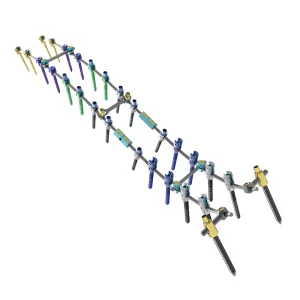
Furthermore, our High-Strength Cocrmo systems are specifically designed for complex adult spinal deformity cases. The increased stiffness of Cobalt-Chrome rods compared to standard titanium allows for better maintenance of sagittal balance, a key metric in modern Canadian spinal deformity surgery. Whether it is for a degenerative condition in a senior citizen in Victoria or a trauma case in Winnipeg, our pedicle screw systems provide the stabilization required for successful fusion.
Partner with a trusted manufacturer and exporter. Get specialized quotes for Canadian medical institutions today.
 WEX Medical