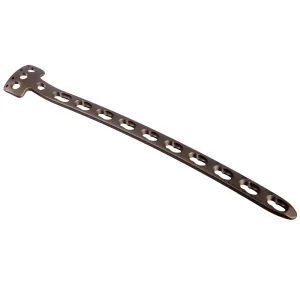
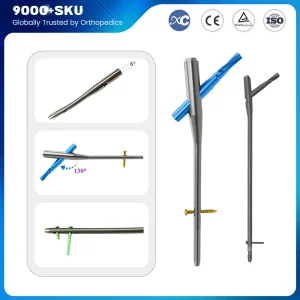
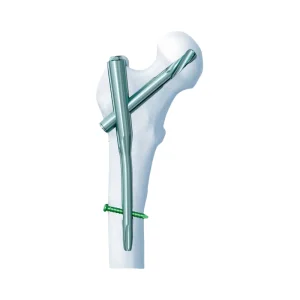
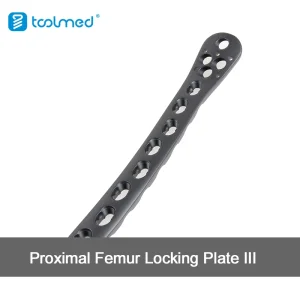
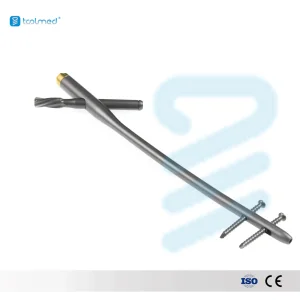
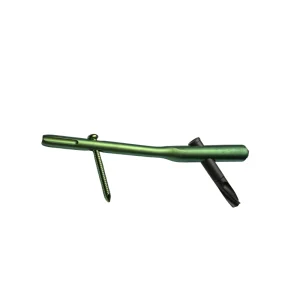
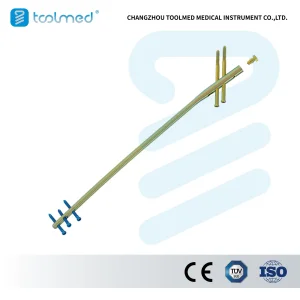
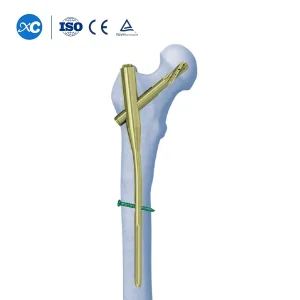
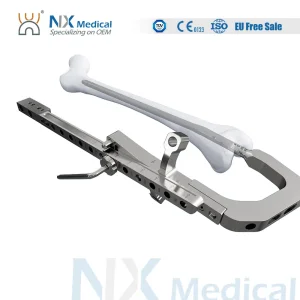
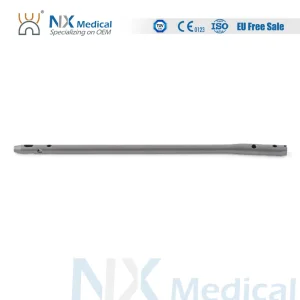
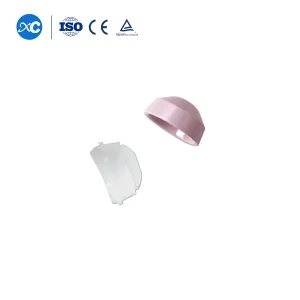
The global orthopedic implant market is witnessing a paradigm shift, particularly in the management of proximal femur fractures. As a leading China Wholesale Proximal Femoral Nails Supplier, we recognize that the aging global population has led to a surge in geriatric hip fractures. Proximal Femoral Nail Antirotation (PFNA) has become the gold standard for treating unstable peritrochanteric fractures due to its biomechanical superiority over traditional plating systems.
Current industrial data indicates that the demand for intramedullary nails is growing at a CAGR of 6.5%. Surgeons worldwide are moving toward minimally invasive procedures that reduce blood loss and shorten recovery times. The Proximal Femoral Nail (PFN) system provides a stable internal fixation, allowing for early weight-bearing and better clinical outcomes in patients with osteoporotic bone quality.
Transitioning from static to dynamic interlocking mechanisms allows for better fracture compression and healing acceleration in complex trauma cases.
Utilization of high-grade Titanium Alloy (Ti6Al4V) ensures maximum strength-to-weight ratio and excellent MRI compatibility for postoperative monitoring.
China has emerged as the primary hub for medical device manufacturing, offering CE-certified products that meet stringent European and American standards.
For international medical distributors and hospital procurement departments, sourcing from a reputable Proximal Femoral Nails exporter in China offers a competitive edge. The integration of advanced AI-driven CNC machining and cost-efficient production cycles allows Chinese factories to deliver high-precision implants at a fraction of the cost of Western counterparts.
Local application scenarios for PFN systems are diverse. In developed regions, they are used in high-volume trauma centers specializing in geriatric care. In emerging markets, the affordability of Chinese-made titanium nails enables public healthcare systems to provide high-quality surgical care to broader populations. Whether it is an intertrochanteric fracture, subtrochanteric fracture, or a high-energy trauma femoral shaft break, the Proximal Femoral Intramedullary Nail remains the instrument of choice.
Changsha WEX Medical Instruments Co., Ltd. has experiences of more than two decades in areas of innovation and production of orthopaedic implants, such as bone plates, bone screws, interlocking nails, spine implants/internal fixation systems, and all kinds of instruments, which are branded by "WEX". All the implant products have certification of CE and ISO9001/ISO13485, so can reach different requirements of customers.
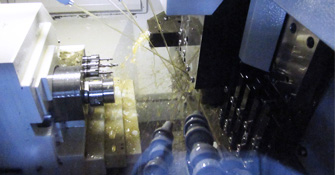
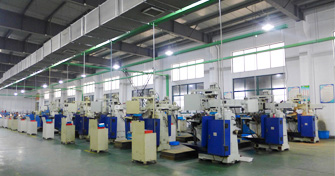
With a Quality Management System passed ISO 9001:2008 and ISO 13485:2003, we have bright and spacious factory workshops; more than hundred production equipments, such as advanced CNC machining centre machines, CNC sliding headstock auto-lathes, CNC milling machines, CNC lathing machines, upmarket ultrasonic cleaning equipments and etc; more than ten advanced and well-appointed testing equipment, such as Projectors, Tensile-testing machines, Durometers, Carbon and sulphur analyzers, Pitting LP detecting instruments and Fluorescent fault detectors and so on. The packaging process is conducted in clean workshop line with GMP standard.
At the beginning of company's establishment, we aim to design and produce implantable products professionally for our customers. Relying on the operational systems of development, design, production and marketing, which is formed by the orthopaedic experts in domestic large and medium-sized hospitals, also we completed the clinical insurance for our products.
We satisfy our customer's requirements with best quality and best service, based on our advanced production and processing technology. Because we insist on the idea of "Be professional for manufacturing high-quality products, be wholehearted for serving customers."
Understanding the mechanical advantages of Proximal Femoral Nails is crucial for importers. Unlike the Dynamic Hip Screw (DHS), which is an extramedullary device, the PFN is an intramedullary implant. This provides a shorter lever arm, reducing the stress on the implant and decreasing the risk of mechanical failure. For China wholesale buyers, the focus is increasingly on the "Antirotation" feature—the PFNA. This involves a helical blade instead of a traditional lag screw, which compacts the bone rather than removing it, significantly improving the "cut-out" resistance in elderly patients.
Our factory employs AI-optimized production paths for these helical blades, ensuring that every batch meets a tolerance level of ±0.01mm. This precision is what differentiates a standard supplier from a world-class orthopedic trauma exporter. As trends move toward personalized medicine, we are also exploring 3D-mapped instruments that assist surgeons in the perfect alignment of the nail during the "expert" insertion technique.
The PFN system allows for a smaller incision, which leads to less soft tissue damage and a significantly lower infection rate compared to open reduction.
Our CNC sliding headstock lathes allow for the creation of complex nail geometries that were previously impossible, enhancing the anatomical fit.
We provide comprehensive documentation support for customs, including sterilization certificates and compliance reports for various international markets.
 WEX Medical