Switzerland has long been recognized as the world's epicenter for medical technology (MedTech) and high-precision manufacturing. The landscape of Revision Hip/Knee Systems manufacturers and factories in Switzerland represents a unique synergy between traditional horological precision and cutting-edge biomedical engineering. For patients and surgeons, "Swiss-Made" or "Swiss-Engineered" in the context of orthopedic implants is synonymous with unparalleled reliability and clinical longevity.
The Swiss orthopedic industry is characterized by a dense cluster of innovation hubs, particularly in regions like Solothurn, Bern, and the Lake Geneva area. These hubs host some of the world's most sophisticated manufacturing plants specializing in revision arthroplasty. Unlike primary joint replacement, revision surgery involves the removal of a previously implanted prosthesis and the installation of a new one. This requires complex systems that can handle significant bone loss, structural instability, and individualized patient anatomy—challenges that Swiss factories are uniquely equipped to solve through advanced R&D.
Swiss factories utilize ultra-high-precision CNC machining and robotic automation to ensure tolerances within microns, crucial for the modular components of revision systems.
Leading the way in biocompatible titanium alloys and cross-linked polyethylene (XLPE) to reduce wear and extend the life of revision implants in active patients.
Compliance with the stringent EU Medical Device Regulation (MDR) and ISO 13485 standards ensures every product meets global safety benchmarks.
The commercial success of Revision Hip/Knee Systems in Switzerland is driven by an aging global population and the increasing demand for high-performance secondary implants. As primary replacements reach their 15-20 year lifespan, the medical community looks toward Swiss factories for revision solutions that offer superior mechanical stability.
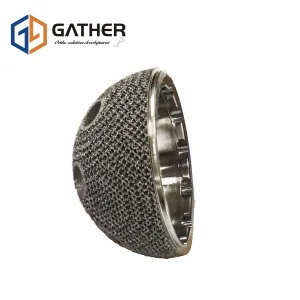
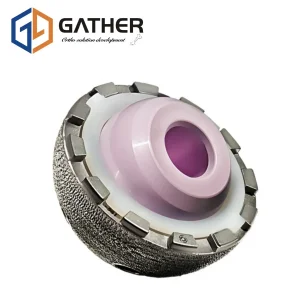
In Switzerland, the industry trend is shifting rapidly toward Digital Orthopedics and AI-Integrated Manufacturing. Modern factories are no longer just metalworking shops; they are technology centers where 3D printing (additive manufacturing) is used to create trabecular structures that mimic human bone. This allows for better "osseointegration," where the patient's own bone grows into the implant, providing a permanent fix that was previously impossible.
Furthermore, the localized application scenarios in Switzerland involve close collaboration between manufacturers and world-renowned clinics like the Balgrist University Hospital. This feedback loop allows for the rapid prototyping of custom revision stems and augments, tailored specifically for complex revision cases where standard off-the-shelf products may fail.
While Switzerland remains a benchmark for production, companies like Changsha WEX Medical Instruments Co., Ltd. have bridged the gap by adopting these rigorous Swiss-level manufacturing protocols. With over two decades of experience, WEX Medical produces a vast array of orthopedic implants including bone plates, bone screws, and specialized interlocking nails branded under "WEX".
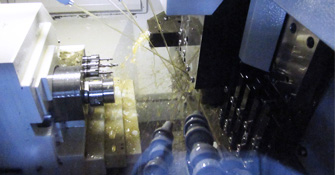
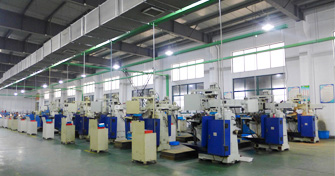
Our commitment to excellence mirrors the Swiss industrial philosophy. Our Quality Management System, certified to ISO 9001:2008 and ISO 13485:2003, operates within spacious, state-of-the-art factory workshops. We utilize more than a hundred units of advanced production equipment, including CNC sliding headstock auto-lathes and high-end ultrasonic cleaning systems, ensuring our revision hip and knee components meet the highest clinical requirements.
We rely on an operational system developed by orthopedic experts from large-scale medical institutions. This ensures that every product, from a simple bone screw to a complex 3D printed knee joint, is backed by clinical assurance and robust engineering.
Explore our comprehensive range of revision-ready systems and surgical instruments.
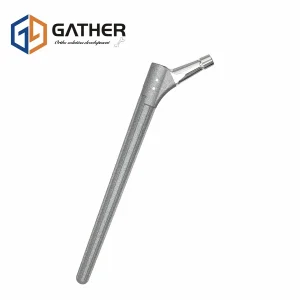
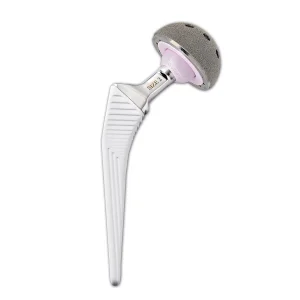
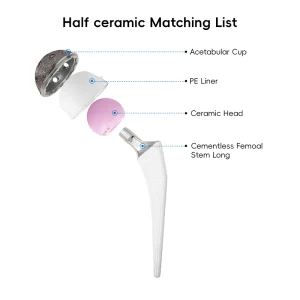
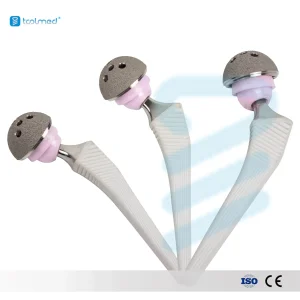
In the revision surgery context in Switzerland, there is a massive shift towards cementless fixation. Swiss factories have perfected the application of plasma-sprayed titanium and hydroxyapatite coatings. This encourages biological fixation, which is vital for patients with compromised bone quality. The S-ROM Titanium Alloy Cementless Hip Joints listed above exemplify this trend, offering modularity that allows surgeons to tailor the fit to the patient's unique femoral anatomy.
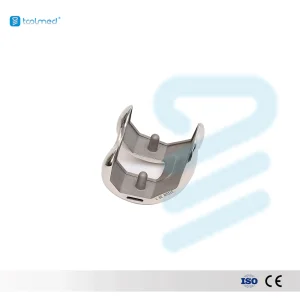
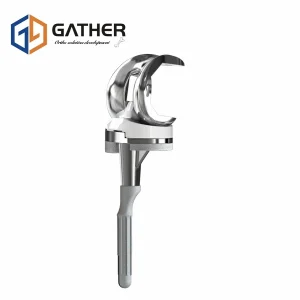
Switzerland is at the forefront of 3D printing in orthopedics. By using MRI or CT data, factories can produce implants that are perfect mirrors of the patient’s defect. This "additive manufacturing" reduces surgical time and improves the success rate of complex revisions. Our World's Leading 3D Printed Prosthesis Knee Joint represents this cutting-edge approach, now becoming a standard in Swiss clinical settings.
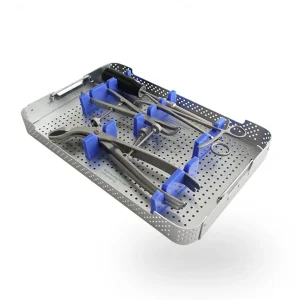
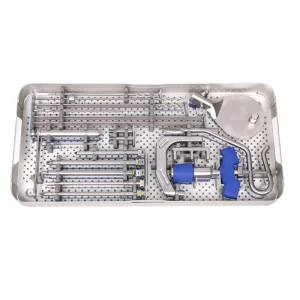
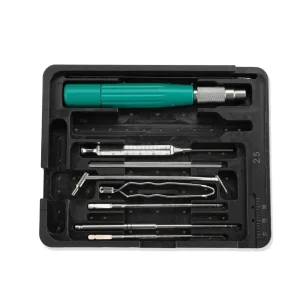
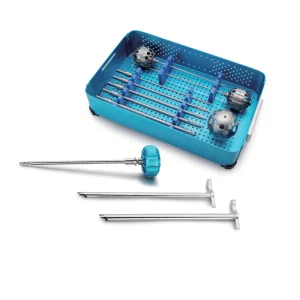
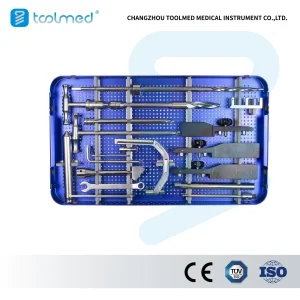
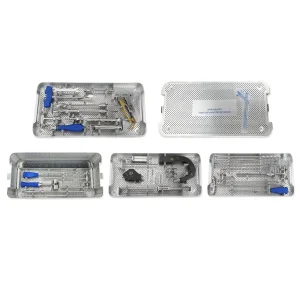
Revision surgery is technically demanding. Manufacturers in Switzerland are increasingly producing "Smart Instruments." These include navigated surgical sets that work in tandem with robotic arms. These tools ensure that the alignment of the revision knee or hip is perfect, reducing the risk of a "third" revision surgery. The locking LCP and PFNA nail instrument sets provided by WEX are designed with this level of accuracy in mind, ensuring compatibility with modern surgical techniques.
Swiss factories are also leading in "Green MedTech," focusing on sustainable sterilization processes and reusable instrument sets that do not compromise on patient safety. The focus on CE-approved, sterilized packaging ensures that the product reaches the operating room in pristine condition, ready for immediate use in the high-stakes environment of Swiss surgical theaters.
 WEX Medical